Wednesday, 2 March 2016

Resurrecting peel apart pack film

The facts

When polaroid went out of business, most of the options for peel apart pack film shooters was lost,. Among them the 665, the last pos+neg pack film. The only remaining producer was Fujifilm with colour and b&w positive only pack film. The emulsions were nothing but amazing with vivid colours and deep blacks in less than a minute of shooting.

Nevertheless, in the years since, sales were diverted to instax and one after another, they discontinued every emulsion and every size of pack film and as of this week, the production is stopped. Does this mean the era of peel apart pack film is over for ever?

Former approaches

When fp-3000b, the ultrafast b&w was discontinued the other year, approaches was made to buy the machinery to resume production. They were met with zero interest from Fuji. With all production ended they may not need their machines anymore and that may or may not change their minds. But we do not know whether they are useful at all without the Fuji emulsions. It could even be that they are broken and beyond affordable repair and that is why the production stopped.

Even if the machines work, Fujifilm may not want to sell them. Most of their photography business, instax in particular but digital as well and even some other branches like cosmetics rely heavily on Fujis know how in film production. Let's face it, there is no way they will ever let a third party know what their emulsions are made of and the same goes for coating if they have secrets to protect in that area as well. That is the core of their business.

What can be done

There is still a chance that some (or all) of the machinery could be sold without risking any trade secrets. Maybe they could be cleaned and modified to protect them. I do not know, but if someone want to give it a try, they have my support and that of many others. 

A word of advice though. Approach Fujifilm with both passion for the film and with great respect for both their right to protect their business and for their decision to discontinue peel apart pack film. They know they have ended an era and they did not do i lightly.

Monday, 29 February 2016

Do you want a fuji x camera?


Pure speculation:

Do you want a Fujifilm x camera?


Designing a camera is really hard work. Not just like: "We had to put in lots of hours"-hard or even "We needed to hire really competent and expensive engineers to make this"-hard. No, i mean really hard, like:  "We had to start all over several times and scrap years of work to get a satisfactory result"-hard or "Quite often we have to give up and realise the product will not reach the market in time"-hard. Trying to design a camera that is neither a copy of the current market standard nor a mere set of good specs, but rather a camera that will find its customers by offering them a unique and better shooting experience is even harder than that.

First, one have to know what a "normal" camera is, how it is to use it, why it is built like it is, from both a photographers perspective and an engineering perspective and how to build and market it. Fuck, that is hard. Nobody can know all of that and that's why we have camera manufacturing corps and not one man camera shops.

When you have gathered all that competence, you still need to be able to ponder:
-We are not good enough, we need to turn taking photos into a different kind of experience. OMG, how do we do that?
Somehow you have to find the answer to that and then the really hard work starts. Now you need to convince everybody in the production team that they are fundamentally wrong about what a camera should really be like and that your vision is better. If you think: "I could do that!". Just try to convince even a single person they are wrong about how they should perform their work and that you know better!

Keeping that vision in the minds of all the staff will then be your never ending and most important task. Whenever they make a decision they have to consider what choice leads neither to a product that consumers recognise, a slightly easier development nor more profit in the short or medium run, but only what leads to a the envisioned different kind of shooting experience.

So, when one day, your head of firmware development approaches you and says:
- Boss, you know this new sensor that we are working with, it can do 4k video. We already have five black and white film simulation modes and if we skip acros we will have time to implement 4k video.
When that happens, its decision time. You know 4k is one of the hot buss words  in the business and you know that most reviewers will say:
- Acros looks nice, but i shoot raw. 4k would have been useful.
You could just say, go with 4k then, but in your heart you know it is hard work time.

You send the firmware guy away with a camera, 5 rolls of across and 5 rolls of other iso 100 b&w films. Since you even considered him being right, you decide to shoot some acros yourself too. After a week or two, you have a few beers with him and the longer the evening gets, the more the both of you whine about how you never want to shoot digital again. But in the end you know what you have to do.

Next day you call him back to you office and tell him:
- Yesterday at the pub, we talked about the film experience as a whole but we can't implement all that in our next camera. So today tell me about something we can do something about,  tell me about acros and what sets it aside from the rest of the films you shot!
He starts with praising the details compared to the hp5+, the lack of reciprocity compared to t-max, the flatness compared to tri-x but that is just general praise of a good film. Not until he starts talking about how the tonality differs and how contrasty photo paper he was able to use when making copies without loosing details in the shadows do you know you have the vision back in his mind.

You tell him:
- People spend hours in front of their computers instead of behind their cameras trying to achieve that look, and they do it over and over again. Now go back to your team and make them understand why we can't release this camera before we can save our customers from those hours of post processing.

Later that day the head of user interface design knocks on your door and you know there is more hard work to be done...

_________________

I want a camera made with that passion. Of course, i don't know what happens behind Fuji's doors and i don't really care whether i'm even close to anything that could resemble the truth with this story. But i do care that it feels like its designed with this kind of passion. That catching up with better specs and new features that other brands introduce only comes after making shooting more fun, more passionate and with less post work. It brightens my day and frees my nights up from using Lightroom.

Thanks Fujifilm for putting in all this hard work to be able to produce cameras like this!

Now i only wish i could afford an x-pro2 as well.
I don't know if you want one, but I sure know that I do.

Tuesday, 9 February 2016

An alternative to IBIS


An alternative to IBIS

For some reason, there are always loud advocates for image stabilisation on the sensor in the camps of Fuji, Canon and Nikon. For certain reasons these companies are not yet interested in the tech. I am with the companies on this , i think there are a lot better things to put time and resources into when there is even better stabilised lenses to get when i need them. With that said, there is one product i'd love to see.

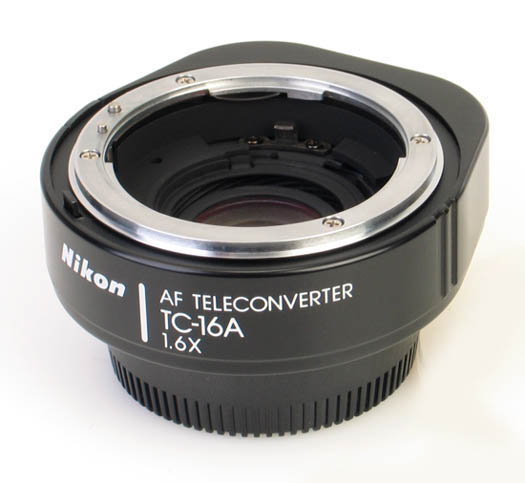
Those of you that are old enough to remember the auto focus introduction in SLR:s in the 80:s would remember the TC-16A from Nikon.

Someone at Nikon came up with the idea that people would like to use their old manual focus lenses with autofocus. Not a bad thought, i might add. Sadly it was hampered by the fact that every lens turned into a 1.6 times longer lens, very much like if you had put them on a half frame camera. Nevertheless Nikon sold their fair share of TC-16A:s and some people still buy them today on the second hand market.

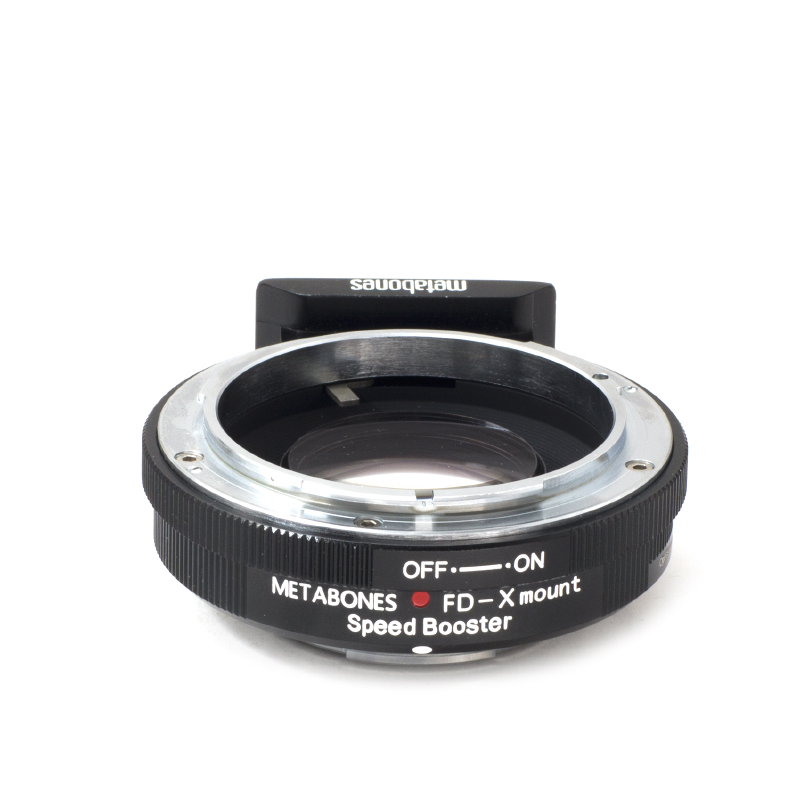
Quite a few years later, Metabones came up with a similar idea. With lots of mirrorless cameras on the market with aps-c or smaller cameras lots of people tend to want to use their SLR glass on their new cameras. There are only three problems.
  1. A regular SLR lens has 1.5 times narrower (measured in mm) field of view on a aps-c sensor than they were made for.
  2. A lens made to cover 24x36mm film lose half its resolving power on an aps-c sensor.
  3. The flange distance will still be the same. Thus the adapter has to be a long tube making the lens+adapter very large on an short flanged and small mirrorless camera.

    Metabones managed to almost completely overcome these problems with their speed booster. 
It works more or less like a magnifier. If you put it on the camera and look into it, you see a sensor the size of 24x36 mm instead of the 18x24 mm sensor that is really there. All the light from the adapted lens is thus gathered with all of the lenses resolving power preserved. For sure, there is a loss of quality by going through the extra lens elements, but it is a lot less than only using half of the lens.


Now back to our Fuji cameras. What if we had a combination of the speedbooster and the TC-16A. A Fuji made focal length reducer with a floating element for autofocus and image stabilisation with a canon FD mount in the front. The relatively short register of the FD mount and the lock ring that tightens the mount very hard allows for adapters to be fitted to mount almost any SLR lens. We would be able to use our Canon FL, FD, EOS, Nikon F, Pentax K, M42, old Fujica X and even Leica R lenses with both image stabilisation and auto focus. A Metabones speedbooster is expensive and a Fuji made focal lenght reduser with that kind of capability would at least be twice the price. But there is no doubt i would cash up for it even if i had to sell one of my beloved cameras to afford it.

And let's not forget the best part. We can show it up the throat of those "I need IBIS to take good photographs"-whiners.

Wednesday, 3 February 2016

Facts and speculations: Update on the organic sensor

Facts and speculations:Update on the organic sensor

In 2014 i wrote this about the organic sensors and what role it could have in the future digital imaging market. Much of it still holds true and there has been very little news on the subject until last month. Now Panasonic has gone public with some more information about the technology itself and way to apply it to reduce motions blur and flicker when using what we today would call an electronic shutter.

First, lets ask ourselves why they go public at all with this! They could have just kept silent about it until they had an actual product to sell. There are a number of possible reasons for going public, everything from that they don't have the resources to finalise a product themselves to that they want to start a buzz or wanting to protect their patents. We can't really know what combination of reasons that made them disclose the information, but we can draw conclusions about what they are not planning. They do not intend to take the world by surprise, suddenly shipping cameras with organic sensors. That makes perfect sense too, the digital sensors of today are getting rather close to what is theoretically possible in terms of low noise and high DR. At some point in the not so far off future, the best way to compete in that market will no longer be by performance, but rather by getting the production cost down. Whenever an organic sensor would reach the market, that future would probably already be upon us and getting the prices down is all about volume and production efficiency and almost nothing about virgin tech.

With that said, lets go back to the announcements. What first strikes me is that they have upped the promised dynamic range from 88dB to 123dB by applying Fujis old Super CCD  SR II structure of mixing large and small photodiodes. From the experience of the Finepix S5 Pro we know this works remarkably well. That old sensor from 2006 with 6Mp of high sensitive and 6Mp of low sensitive was very popular by wedding photographers for its high dynamic range and still beats modern cameras in that department. It didn't deliver the same detail as a 12Mp sensor of the time, but still a lot more than a 6Mp one. 123dB of DR would amount to almost 41 stops, compare that with the best 24x36mm sensors of today that has just past 15 stops.

Further more, have a look at this passage: "In OPF CMOS image sensor, charge-storage function and photoelectric-conversion function can be set independently." If you look here and here. The orange rectangles called charge storage node and floating diffusion is the charge-storage function in the above quote. A floating diffusion is usually an isolated part of a chip that can store charge without being affected of what goes on in the rest of the chip. The photoelectric conversion is done by the film, the organic part of the sensor. Combine this information with: "Wide incident angle (60 degrees), high sensitivity, high saturation and highly-functional circuits due to a unique feature of OPF, in which an OPF for photoelectric-conversion and a readout circuits are independent." and focus of the last 5 words. This sensor can actually be built into 3 different parts that can work independent of each other. For example, one could have a large OPF with charge storage behind all the film, but the chip that actually does the readout could be a lot smaller and travel behind the film to cover the whole area. This would make it even more suitable for very large formats than i previously believed. Instead of the cost increasing linear to the sensor area compared to exponential for conventional sensors the cost of a twice the size organic sensor would be less than twice the price if one accept a longer readout time. For a large format photographer a few seconds of readout time is nothing, as long as the capture time is the same all over the image.

In the 2014 text, i also mentioned the state of the camera market as such. Not much have changed, but there are a few things worth mentioning.
  1. There are now 645 full frame sensors available on the market. They are very expensive, but not that much more expensive than crop 645 sensors were a few years ago. Production has thus become more efficient and it will become even more efficient before we see an organic medium format sensor.
  2. Sony acquired Toshiba's sensor department. Toshiba was important it was one of the few remaining competitors to Sony in the small frame sensor market. Nikon for example, can no longer ask if Toshiba can make a cheaper sensor than what Sony offers when they need a new one.
  3. Canon is lagging even more behind in the DR department. They still have almost 50% of the market, but sooner och later this will catch up with them and they know it. Not upgrading their fabs to modern standard for 10 years was a very smart and brave decision and has so far not cost them that much while saving a lot of money, but the time brave turn into foolish is getting closer every day. 
  4. Fuji film are slowly increasing their semi-conductor production. They just announced the establishing of a new plant. It's not a big one, the investment is about $8.4 million, but it tells us that they are expanding nevertheless. 
  5. When i wrote the old text Fuji X system and the Samsung mirrorless systems were up and coming. Now Fuji X is established and Samsung looks to be abandoning their mirrorless effort.

Speculations

The facts that Panasonic is this public about the organic sensor, that the competition in the small frame sensor market is decreasing and that Canon has still not caught up with Sony in DR is opening up a slim chance that Panasonic is aiming for something bigger than i expected in 2014. I say slim, because the problem of getting the production cost down so early in the development is almost impossible. But somehow it does fit the facts and if Panasonic could get Canon onboard they would at least have the volume needed to actually aim for the small frame mass market.

Still, if that would become true, the impact on the small frame market would still be nothing compared to what it would do to the large and medium format markets.

Enough speculation, in a few more years, we may actually know something.


Tuesday, 26 January 2016

Pure speculation: Medium format fuji

Commenting on fujirumors post:Medium format Fujifilm

Fujirumors has a source saying Fujifilm will release a digital medium format interchangeable lens camera by September. Take it with a grain of salt is also added for good measures. First, ill tell you why that grain should be a ton and then we can have some fun speculating.

There are numerous reasons why this is highly unlikely. 
  1. Fujifilm, just a week ago, said that they are looking into the market, but hasnt even found a sensor yet. It takes more than half a year to develop a camera.
  2. Their camera developers should now be fully comitted to the final stages of the x-t2 project. In theori they could allready be done, but when did such a project ever finish early?
  3. The medium format market is both a small and a risky one. Fuji has allready found a way of making safe money in that market. They manufacture the Hasselblad lenses. Fuji may be oddballs simetimes, but they are not really really stupid. No one in their right mind would risk that relationship by competing with their partner.
  4. Who would the customers be? An aps-c xpro2 is $1800 or so. Let's say they could sell a camparable MF camera plus a good kit lens for slightly below $10000. No way enough people would buy it to make the production profitable.

Speculations

If Fuji is indeed, dispite how unlikely it is, going to launch a digital medium format interchangeable lens camera by September, what can have prompted it? I have a few suggestions. 
  1. It's a rebranded Hasselblad for the Japanese market, just like the GX645AF was. 
  2. The deal with Hasselblad is coming to an end.
  3. They are now confident that the organic sensor will work and will change the game. Having a medium format system in production when it eventually arrives, would maybe make some sense.
  4. Sony's sensor division has given Fuji an offer they can't resist. A deal to get a very nice price on MF sensors in return from staying away from full frame 24x36mm could be a candidate. Or if Sony's purchase of Toshibas sensor department brought a product without any customer.
  5. The camera is so different that it will not compete on the same market as Hasselblad does. GA645 style point and shoot, TLR, Folder, GX680 monster or whatever.
  6. The camera is something that will increase Hasselblad profit as well. Compatible with H system, but not competing with it. I cant really come up with a good candidate, but maybe Fujifilm has.
  7. It's really really odd. Let's say a big plastic instax with a built in scanner instead of a sensor. Wouldnt cost much to buy but every picture would be $1 and there would be a few minutes delay for the instax to develop before its scanned.
  8. There is a slight error with "digital medium format interchangeable lens camera". Take away digital or interchangable. A realaunch of a 6x7 folding film camera or a medium format x100 makes a lote more sense
  9. Someone at Fuji came up with a real game changer.
Most likely, however, this rumor is nothing but a rumor.

Monday, 25 January 2016

Pure speculations: When are Canon and Nikon coming to the mirrorless market?

Pure speculations: When are Canon and Nikon coming to the mirrorless market?

There are a lot of speculation going on about when Nikon and Canon will enter the mirrorless market. Most people seem to forget that its only 20% of a market that Nikon and Canon allready share 80% and that the ramaining 20% is a hornets nest of inverstment with Sony, Fujifilm, Olympus and so on, realeasing cameras and lenses on the double. 

Thus,  i can't really tell you how it will happen and when it will happen. But there is one thing i can tell you for sure. That is how they dont want it to happen. There is no way Nikon or Canon would like to jeopardise their combined 80% market share by helping Sony, Olympus and Fujifilm close the gap between mirrorless and DSLR in peoples minds. 

Nikon and Canon has very successfully imprinted in the consumers that "full frame" is the future. It's a powerfull meme that the m43 brands and Fujifilm has to fight every day. If that somehow was broken, smaller cameras would be a threat to them and they may want to compete. Likewise, if Sony managed to start making cameras and lenses that appeal to photographers as well as techies, that may do the trick. One of them may or may not loose their nerves as mirrorless slowly grow, but in the end, its not up to Canon and Nikon, but the actors on the mirrorless market to show that its a part of the market worth competing in.

Saturday, 23 January 2016

Facts: Twice the size

Twice the size
Facts and myths about film/sensor size
The camera industry likes it neat, there are a lot of different negative/sensor sizes used, but most of the popular ones are twice the size of its smaller sibling and half the size of its big brother. For interchangeable lens cameras of today, most use one of these formats: m43, aps-c, 24x36, 645, 6x9, 4x5, 5x7, 8x10. There are variatations, discrepanses and odd formats, for example 6x6 is very polular and there are both smaller and larger formats too, but lets ignore them for a while. Dispite all the different names and units used in those formats, they form a nice scale of approximately twice the size.


Today, the internet is full of people advocating aps-c over m43 and full frame 24x36 over aps-c. Most of them usually start with the notion that bigger is better and then try to learn the technical arguments for that and the counter side usually argues weight and price in favour of the smaller gear. The truth is that those formats are discussed for no ohter reason than that the industy can make them for a reasonable price right now. But does it really matter if the the film/sensor is twice as large? What does it do to the picture? I’ll try to answer those questions without advocating for or against any format.

I will begin with a mind experiment. Picture yourself camera A and camera B, both of them are rigged to take a picture into identical dollhouses. The cameras look and work exactly the same, with one exception, size. Camera A is exactly twice the size of B, by area scale. Both lens, film, even the release button, everything are proposionally smaller. The film/sensor is thus half the size B compared to A. Now picture that the dollhouse which camera B is taking a picture of is scaled down exactly as much as the camera. What would this do to the pictures taken by camera A and B?

The answer is, apart from that the picture in camera B would look one stop darker (since the aperture is scaled down to half the size too), there would be no difference at all between the pictures of camera A and camera B. Compensate with twice the time, iso or twice as much light and the pictures would be identical. (Actually there is a quatum effect called diffraction would slightly affect the sharpness of the image, but that is beyond the scope of this article).

This is actually very intuitive and i will not even bother going into the technical details of why. Instead, lets analyze the consequences of this for a few photographic properties. Field of view, exposure, depth of field and bokeh.

Field of view

Obviously one can make a lens for a camera with twice the film/sensor size that has the same field of view as its smaller sibling. Translated into camera tech would be shorter focal length which is usually measured in mm. The formula is very simple, if you make the film/sensor twice as big, you need to multiply the focal length with 1.5 for achieve the same field of view. A 60mm lens on a 6x4.5cm camere has the same field of view as a 90mm lens on a 6x9cm camera. The same goes for m43 vs aps-c and aps-c vs 24x36mm.

Exposure

This is even simpler. If the time and aperture is the same, the exposure will be the same regardless of sensor size, as long as the iso is the same. In the dollhouse example, camera B needs more iso to get the same picture only because the aperture gets one stop smaller as well as the film.

With that said, a twice the size film/sensor will have twice the amount of light to gather information from. That means it is easier to build a sensor with higher iso sensitivity if it is larger. At the same time, large sensors are a lot more expensive to make.

Depth of field

This is where most of the internet gets it wrong for real. You can read any number of sites that sais a 35/1.4 lens on a aps-c (18x24mm) camera has the same depth of field as a 52/2 lens on a full frame (24x36mm) camera. This is a simplification to try to explain something complicated in technical terms instead of exploring what it really does for a photographer.


Lets go back to the dollhouse. The pictures from camera A and B has the same field of view even though the film/sensor size is twice the size. Thus, A have to have 1.5 the focal lenght of camera B. If the area of the film/sensor is twice the size then the area of the aperture has to be twice the size too. Twice the aperture size equals one stop. So lets use the 35/1.4 and 52/2 example above. But how can the depth of field be the same if the smaller dollhouse looks exactly the same on the picture from camera B as the larger one does on the picture from camera A? Stop and think about this for a moment or two!


Well, you are right! It is not the same and this is where the size of the film/sensor really start to make a difference for the pictures taken. It is really stupid to try to convince people that it is too. Just consider this: The infinity on a 35/1.4 is at 35m and the infinity of a 50/2 is at 50m (regardless of film/sensor size). That means at 40m the 35mm has infinite DOF while the 50mm has a limited DOF. Thus they are not the same and anyone trying to tell you that is most likely repeating a miss leading simplification read on the internet. What is true is that you need a larger aperture to achieve the same field of view on a shorter lens than on a longer. How much larger, and if it is even possible, depends on how far away your subject is. If you are about to take a close-up poirtrait, you might not need a larger aperture at all and if you are close to infinity focus, it may not be possible to achieve the same short DOF whatever you do.

Bokeh

The quality of the out of focus part of the picture is very much a question of taste. But when it comes to film/sensor size there are absolutes that really shapes the look of the oof part of the picture. Once again, lets go back to the dollhouse. Lets imagine the there is a living room in the dollhouses to which the cameras point. There is a table in focus, a sofa behind it slightly out of focus and behind that a wall that is very out of focus. Keep in mind that the pictures look just the same even though one dollhouse is smaller than the other. A smaller dollhouse means shorter distance between the table, the sofa and the wall, they still look the same.

Yes, smaller film/sensor sizes with a lens with the same field of view needs a shorter distance to give the same amount of loss of focus than a larger camera. WTF, why didnt anyone tell you that? Maybe they simply didnt know or they were trying to explain it from a technical point of view rather than a photography point of view.


This bears consequences. Lets introduce camera C and D. Camera C has twice the film/sensor size as camera D but also have a shorter lens so that the FOV are the same. It also have a larger aperture so that the depht of field is the same at the distance of our subject. In this case, we shoot the same subject with both cameras, a car from the front but slightly from one side. Behind the car there is a road that stretches through the landscape to the horizon. The DOF stretches so that the car is in focus, but the road is behind it is not. The in focus part of the picture will look just the same with both camera C and D, but the out of focus area will look a quite different. Since camera D has a smaller film/sensor size it need a shorter distans to go from slightly out of focus to completely blurred out than camera C, for the same FOV and DOF. The separatoin between the subject (the car) and the backround will be greater. The landscape at the horizon may even be blurred out completely with camera D, where you could still see mountain tops with camera C. On the other hand if you were not going for separation but for the feel of how long the road is and how far away the mountains are, camera C may do the trick for you.

This is why (apart from the detail and resolution) large and meduim format photographs have a different look than small frame photos. Once you learn to recogize that look you can choose what film/sensor size is suitable for the picture you plan to take. Or if you you are going to buy a new camera, what film/sensor style suites your style of photography best. Can you emulate this look on a smaller frame camera. Yes and no, you can use a longer lens and walk back so that you capture the same scene, but it would also change the perspective and give you the "i rather zoom than take the picture from the right distance" look.